


















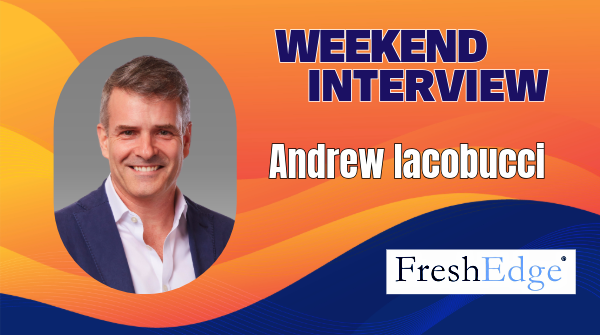
Andrew Iacobucci, FreshEdge, LLC
Midwest-based FreshEdge, LLC is a well-known family of companies with a relatively new leader: get to know CEO Andrew Iacobucci.
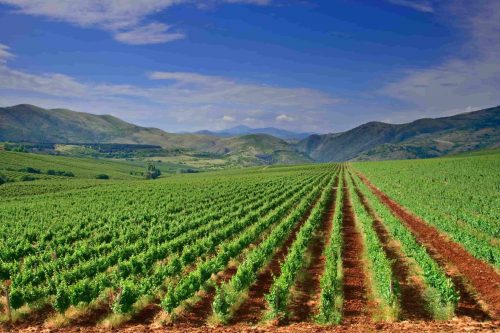
aqilah/Adobe Stock
In this article
Founded in 2019, Indianapolis, IN-based FreshEdge, LLC continues to evolve, acquiring businesses and honing its stance in the fresh produce and greater food industries. Part of the current era is bringing in a new CEO to replace the irreplaceable Steve Grinstead.
We asked Andrew what it was like to step into Steve’s shoes, his own take on the industry, and how FreshEdge will be positioned to succeed despite the current volatily of the markets and world.
Q: Tell us about your background, education, and original career aspirations.
I was born in the United States but moved to Toronto, Ontario when I was very young. I started my career as a lawyer and then a consultant before realizing I wanted to do what my clients were doing.
My last consulting engagement was with H-E-B, the Texas-based retailer, which ignited my interest in food. I spent a decade or so at Loblaw in Canada and six years at US Foods in a variety of commercial and general management roles (including interim CEO).
After a short stint running a home improvement retailer in Canada, I am delighted to be back in the food business. I have a son (in college in Vermont) and a daughter (in school in Toronto), both of whom keep me grounded!
When I joined Loblaw, Walmart was aggressively building supercenters in Canada, which we obviously had to take seriously.
Q: You spent a decade at Loblaw Companies, what were the top takeaways from your tenure there?
First, the importance of fresh and especially produce in a retail environment—if you do it well, more often than not you get the trip. We spent huge energy honing our produce chops and they’ve done a fantastic job of winning in produce.
Second, is the importance of playing your game. When I joined Loblaw, Walmart was aggressively building supercenters in Canada, which we obviously had to take seriously. But we allowed ourselves to be distracted by trying to neutralize our disadvantages instead of laser-focusing on what we were good at.
We eventually got there and the business has been tremendously successful since but there were some challenging years that probably needn’t have happened.
Q: How does Canadian grocery retail differ from here in the United States?
Produce and perishables generally are more or less indistinguishable from U.S. retailers, although there’s a greater emphasis on ethnic assortment, particularly in urban centers like Toronto. And there’s a very strong hard discount segment that has (so far) kept the Aldis and Lidls of the world focused elsewhere.
The differences show up more in center store where there tends to be less brand choice (often only one or two national brand options) and very strong control in brand penetration.
Loblaw’s President’s Choice and no name brands revolutionized private label in Canada and while the other retailers haven’t quite kept pace, Canadian consumers are very comfortable buying private label.
I’ve yet to encounter a problem that can’t be solved with the right people around the table and a focused agenda.
Q: What valuable lessons or insights did you glean from your years at US Foods?
Fresh produce is as important in food distribution as it is in retail—it’s hard to do well and those that do, will win more than they lose. Other learnings include the importance of a strong strategy, rigorous execution, and a creating a culture of accountability.
Other more personal learnings from my time: first, I’ve yet to encounter a problem that can’t be solved with the right people around the table and a focused agenda. Second, it’s impossible to over-communicate—what can feel like tedious repetition is actually critical reinforcement.
Third, strong process always trumps heroics—going to the wall for our customers when we fall short is incredibly important given how much they depend on us—but eliminating the need to go to the wall in the first place is even more important.
Q: What made you want to take on the CEO role at FreshEdge? What do you bring to the table?
After a year at the helm of a Canadian home improvement retailer, I realized I have a true passion for food, and especially produce.
I was fortunate to have the opportunity to consult with the FreshEdge team on its sales and merchandising strategy through my connection with Wind Point Partners, the private equity sponsor of FreshEdge. This allowed us to get to know each other before making the arrangement permanent.
I was hugely impressed by the passion at all levels of the organization and the unstinting commitment to quality and customer service I would’ve been delighted to have in my previous food roles. So when the opportunity arose to join the organization full time, I didn’t hesitate.
I bring a deep understanding of what it takes to build and grow a scale business.
I bring a deep understanding of what it takes to build and grow a scale business. The local touch that our teams bring every day to our customers is best-in-class and must be preserved and leveraged.
But there’s real value in creating consistency in core operating processes (pipeline management, inbound and outbound logistics, commodity procurement, warehouse operations, AR and AP) to create greater efficiency and effectiveness without sacrificing what makes these businesses great.
Q: Did you know Steve Grinstead and Greg Corsaro well before considering the job?
Only by reputation; but I’ve followed FreshEdge for years. Expanding our produce reach was a top priority at US Foods and we always ran into real challenges when facing FreshEdge companies (as we did in our own backyard in Chicago).
FreshEdge has done a terrific job building a first-class organization with an enviable roster of top-drawer distributors and they were really tough to compete with.
Q: How many companies are part of FreshEdge now? Are there plans to go outside its current, cohesive groupings?
FreshEdge started out with the combination of two great Indianapolis-based produce companies: Indianapolis Fruit and Piazza Produce, which first joined forces in 1997. Since then we’ve averaged 3 to 4 acquisitions per year and there are now 14 companies in the FreshEdge family.
The acquisition strategy has been consistent and effective: create scale by acquiring the best local produce distributors and integrate back office functions while preserving local branding and customer relationships.
Food distribution, and produce distribution in particular, is a local business that trades on high-touch sales and operational practices.
The pace of acquisition slowed somewhat since a very busy 2023 as the industry has endured a couple of lean years. We’ve been encouraged to see deal flow resume in recent months and continue to explore acquisitions in strategically relevant categories and geographies.
I don’t believe there’s an intrinsic ceiling on growth by acquisition.
Q: Is there’s a limit to how many businesses can work together harmoniously? How do you guard against becoming inefficient or unwieldy?
My time at US Foods taught me the importance of differentiating between areas where scale is an asset (like the core operating processes mentioned above) and those where a local touch is paramount (like local product procurement, sales, and operations).
By differentiating the two (and therefore looking for leverage in areas where it makes sense)—and encouraging process consistency and a culture of collaboration and best-practice sharing—I don’t believe there’s an intrinsic ceiling on growth by acquisition.
We’ve learned many important lessons from past acquisitions—like setting clear expectations around what it means to join the FreshEdge organization and the importance of collaboration and accountability—which I believe will make us better moving forward.
Q: The greater food industry continues to struggle in both unique and collective ways – how are you helping your customers succeed?
Our philosophy has long been if you consistently give customers what they need, profitable growth will follow; as a result, we deliver to most of our customers several times a week and go out of our way to correct errors when they happen.
This creates enormous trust and loyalty with our customers, many of whom have been with us for decades—it’s one less thing for them to worry about in a world where, increasingly, there’s a lot to worry about.
We’re also highly focused on categories that help customers reduce costs and become more efficient (value-added produce stands out) and to consolidate their purchases as a single (reliable) drop is far more efficient than splitting their purchases among several distributors.
Above all, it’s crucial to address each customer’s individual needs instead of a “cookie cutter” approach to the relationship.
Q: With customers watching every dollar, what can suppliers and distributors do to ensure they consistently deliver value?
As consumer food spend as a percentage of disposable income continues to fall, suppliers and distributors are having to focus simultaneously on value and innovation.
Customers are still spending on food away from home (and, if anything, percent of household income is climbing slightly) but they’re increasingly selective about that purchase decision, looking for new flavors and concepts.
Food distributors need to keep pace. Produce quality and variety are paramount, as is price, which is why we’ve invested heavily in creating scale in our sourcing/procurement and freight operations to bring the best possible cost to our customers day in and day out.
Above all, it’s crucial to address each customer’s individual needs instead of a “cookie cutter” approach to the relationship.
In different markets, we have different cut-off times, different standard delivery days, and carry different brands on certain items, depending on customer preference. This flexibility is not only crucial to their success, but creates real loyalty.
Q: What does FreshEdge do better than other regional distributors?
At FreshEdge, we’re obsessed with providing solutions tailored to each customer to help drive success for them, not focusing on just selling more items.
Solutions can include delivery frequency, specific brands, increased variety, frequent in-person sales consultation, hard to find inventory, etc., and solutions aren’t the same for every customer.
Other examples include menu planning and plate cost forecasting, alternative menu ideas to attract consumers looking for a unique eating experience, and sourcing local and regional emerging brands.
We’re also heavily focused on forging long-term, high-quality supplier relationships which create trust in the supplier community that we’re there to market their goods in good times and bad.
The diversity of the customers we serve also creates market expansion opportunities for our suppliers, who are always looking for ways to diversify their customer bases.
The diversity of the customers we serve also creates market expansion opportunities for our suppliers, who are always looking for ways to diversify their customer bases.
We try very hard to ensure our commercial decisions are made with the long-term health of both our customers and suppliers in mind—this isn’t always easy and we don’t always get the balance right but it’s an area we’re all focused on.
Q: Where is AI having an impact across operations? Where is it falling short?
There are several positives. For instance, AI allows us to identify shifting patterns in inventory, labor, and routing across the network to make changes to process flows and drive efficiency more quickly.
AI models also help identify labor trends and project needed headcount much more quickly and reliably than in the past; this also helps us pick up on shifts in customer behavior to address potential customer defections before they happen, as well as to modify inventory ordering patterns based on early detection of demand changes.
In addition, we recently implemented an AI-powered active safety tool for drivers. It provides in-cab coaching as well as accident-prevention warnings that anticipate potential incidents based on real-time factors, thereby protecting our drivers and the public in quite meaningful ways.
AI falls short when it’s faced with messy, unstructured data. The insights it generates are only as good as the data underneath it; where data is polluted, the output quality is hampered.
The gap isn’t the technology, but the data foundation it sits on. We’ve prioritized a master data cleanup exercise to help address this issue moving forward and unlock the full potential of AI in our business.
The gap isn’t the technology, but the data foundation it sits on.
Q: What three trends (or challenges) in the food industry will have the most impact on distributors this year?
There are several trends in the food industry produce distributors should be aware of.
The biggest ones are (a) macroeconomic factors such as fuel, inflation, and geopolitical events; (b) shifting consumer behavior with respect to how and where they’re spending their food dollars—at home, away from home, different retail formats (independent retailers, big box stores, discounters, C-stores), and foodservice segments (QSR, fast casual dining, white tablecloth, etc.); and (c) the continued trend toward healthy eating and GLP-1 impact (likely a net positive for produce distributors).
The supply and demand dynamics in our industry largely reflect the impact of these as consumers are trading down and embracing convenience.
National chains, consolidating market share gains from 2025, now appear to be enjoying a structural advantage as these value and convenience advantages take root.
Q: Is there an elusive personal or professional goal or achievement you have yet to achieve?
During the year leading up to joining FreshEdge I visited Vietnam for close to a month. I had become a huge fan of Vietnamese pho during law school and my interest in visiting was further piqued by the passion with which Anthony Bourdain regularly spoke of the people, the countryside, and the cuisine.
The trip was unforgettable for many reasons, and while I was able to sample most of the dizzyingly varied local dishes (food was a major focus!), I would love to return at some point to learn at the feet of one (or several) of Vietnam’s many acclaimed chefs how to prepare those dishes. Someday…
Q: Anything else you’d like to share with our readers?
Only that I’d like to convey my gratitude for the warm welcome to FreshEdge extended by Wind Point, Steve, Greg, and the FreshEdge and operating company leadership group. This is a great organization with a bright future and I’m delighted to be a part of it.
News you need.
Join Blue Book today!
Get access to all the news and analysis you need to make the right decision --- delivered to your inbox.




Subscribe to our newsletter
© 2026 Blue Book Services. All Rights Reserved

